Tuesday, January 31, 2017

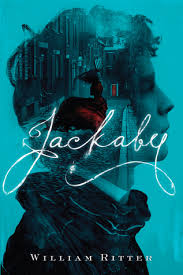
Jackaby

From Publisher's Weekly...

Toss together an alternate 19th-century New England city, a strong tradition of Sherlockian pastiche, and one seriously ugly hat, and this lighthearted and assured debut emerges, all action and quirk. In the best Doyle tradition, the first-person narrator is pragmatic yet naïve Abigail Rook, native of Britain and seeker of adventure. Thwarted in Ukraine, she catches ship for the U.S. and lands in New Fiddleham, penniless and with few employable skills. This matters not to R.F. Jackaby, the peculiar stranger with the awful hat, who is more interested in the kobold (household spirit) Abigail has unknowingly picked up on her travels. Jackaby is a detective in need of an unflappable assistant—literally, as his last one “is temporarily waterfowl.” Abigail’s keen eye for detail and complete ignorance of the paranormal make her observations invaluable to him, and she’s soon caught up in the eccentric mayhem that is Jackaby’s workaday world. Ritter is also capable of tenderness and pathos, as his description of a suffering banshee demonstrates, leaving room for development in any future cases Abigail may chronicle. Ages 12–up.

Excellent!  
Friday, January 27, 2017

Steve Jobs Insanely Great

From Publisher's Weekly…

Harland brings the style of simple drawings paired with easy-to-digest facts she used in her first novel, Bon Appétit! The Delicious Life of Julia Child, to a breezy yet thorough illustrated biography of Apple pioneer Jobs. Beginning with his literal birth and following through the important moments of his life, Harland’s take is both engaging and educational, though not especially demanding of the reader. The black and white art is unrefined but pleasant and contributes to the overall tone, which is effortlessly charming without being terribly enlightening or revealing. Harland uses the page layouts to full advantage, with maps, diagrams and call-outs galore. Though it’s certainly informative for all ages, some readers will yearn for something with more depth and complexity in its execution, even as they whiz through the Richard-Scarry-for-grown-ups pages. 

Good


Thursday, January 19, 2017

Moo

From Publisher's Weekly..

In a book that could have easily been titled Love That Cow (or Hate That Cow, actually) Newbery Medalist Creech uses short chapters that blend poems and prose to trace a displaced city girl’s adjustment to life in a “boat-bobbing/ sea salty harbor town” in Maine. After 12-year-old Reena’s parents move the family to Maine from “a harlequin city/ of sights and noises,/ of museums and parks and music,” there’s more in store for Reena and her younger brother, Luke, than cold weather, lobster, and blueberries—starting with elderly Mrs. Falala and her menagerie of pets, including Zora, a cow as cantankerous as her owner. At their parents urging, Reena and Luke begin helping Mrs. Falala with chores, and before long Reena has agreed to take care of Zora and show her at the local fair, which requires work, patience, and help from more experienced livestock handlers. As Reena learns that a little kindness works wonders for both people and animals, Creech’s spare narrative creates vivid, emotion-packed images of landscapes, characters, and “that/ wild-eyed/ heifer,” Zora, that will stay with readers. Ages 8–12.

Adorable!  

Wednesday, December 14, 2016

Awkward

From School Library Journal..

Gr 5 Up—Flawed protagonist Peppi is fantastically imperfect in this middle school graphic novel. She is the new girl at Berrybrook Middle School and is having a hard time fitting in because of her struggles with social anxiety. The work opens with the young teen pushing away the first person who tries to help her, Jaime, and it only gets more awkward from there. A feud between Peppi's after-school art club and Jaime's science club springs up. Can the two groups stop fighting long enough to earn a spot in the school fair? Will Peppi overcome her social anxiety and apologize to Jaime? Will any of them feel comfortable enough in their own skins to have a good school year? The story is told with a clear, believable voice. Diversity is reflected in this average middle school setting, and there are characters from a variety of ethnicities and are differently abled. Chmakova is an adept storyteller and organically incorporates messages of kindness and understanding without being preachy. The placement of the text and images were carefully considered. The illustrations and lettering are playful, bright, and fun, in keeping with the tone of the work. Readers will connect with the relatable, complex characters. VERDICT A superb graphic novel that authentically depicts the naturally awkward adolescent years.—Julie Zimmerman, Brooklyn Public Library


Adorable!  Great story and illustrations!

Tuesday, December 13, 2016

Gabe and Izzy

From Booklist (via Amazon)

Recasting her privately published memoir Still Dancing (2009) into a shorter form, Ford offers a clear-eyed self-portrait of a teenager in furious denial after a devastating diagnosis of the degenerative neuromuscular disease Friedreich’s ataxia ended her dreams of becoming a professional dancer. In a narrative punctuated by checklists, bulleted points, recommendations for additional informational resources, and thank-you letters (and photographs) from teens, Ford describes how her stubborn refusal to use artificial aids set her up for sustained bullying in high school and how, after graduation, a coonhound named Izzy—who developed a physical disability strangely similar to hers—pulled her out of the denial stage and led to her becoming a nationally known motivational speaker with an antibullying message. “I’ll never be a prima ballerina,” she finishes, “but I am still dancing.” Salutary reading for young people with developing disabilities, as well as those who bully or are bullied. Grades 6-9. --John Peters --This text refers to an out of print or unavailable edition of this title.

Very good….inspirational!

Monday, December 12, 2016

I Will Always Write Back

From Publisher's Weekly…

In 1997, a 12-year old girl from Hatfield, Pa., and a 14-year-old boy from Mutare, Zimbabwe, began a pen-pal relationship. In alternating chapters, Alifirenka and Ganda recount how their mutual curiosity led to an increasingly honest, generous correspondence. Martin loves receiving Caitlin's photo, but when she requests one in return, "My heart went from sprinting to a standstill." He sends her the only photo his family owns. Hearing BBC accounts of Zimbabwe's political and economic turmoil alarms Caitlin, but a letter written on a popsicle wrapper shocks her: "I gasped. My friend was writing me on trash." She begins to send him her babysitting money—which Martin's family uses to buy food and to pay school fees and rent—and Caitlin's family eventually decides to sponsor Martin's education. Sensitively and candidly demonstrating how small actions can result in enormous change, this memoir of two families' transformation through the commitment and affection of long-distance friends will humble and inspire. Ages 12–up. 

What a wonderful and inspirational story!  Fun to read!

Thursday, December 1, 2016

Popular A Memoir

KIRKUS REVIEW


An interesting and earnest memoir of a social experiment conducted by a contemporary eighth-grader who follows the advice in a popularity guide written for 1950s-era teens and blogged the experience for one school year.
Van Wagenen is the oldest child in her loving, quirky family. A talented writer, she’s funny, thoughtful and self-effacing. She is also, as she describes it, part of the “Social Outcast group, the lowest level of people at school who aren’t paid to be there.” Over the year, she discovers a great deal, most notably that despite its sounding a bit pat, popularity is “about who you are, and how you treat others.” Teens will readily identify with her candid descriptions of social dynamics at her middle school. Many of the scenarios that arise from her adherence to the suggestions in Betty Cornell’s Teen-Age Popularity Guide are effectively played to comic effect, such as wearing a girdle or pearls and white gloves. Vignettes about her life, including her grief over the death of a beloved teacher, her horror at hearing the news of a boy killed at a nearby school after he brings in a pellet gun and her excitement over speaking to Betty Cornell by telephone, provide balance.
A fascinating and unusual slice-of-life work whose humor will best be appreciated by younger teens. (Memoir. 12-16)

Adorable and funny!