Thursday, October 26, 2017

Touching Spirit Bear

KIRKUS REVIEW


Troubled teen meets totemic catalyst in Mikaelsen’s (Petey, 1998, etc.) earnest tribute to Native American spirituality. Fifteen-year-old Cole is cocky, embittered, and eaten up by anger at his abusive parents. After repeated skirmishes with the law, he finally faces jail time when he viciously beats a classmate. Cole’s parole officer offers him an alternative—Circle Justice, an innovative justice program based on Native traditions. Sentenced to a year on an uninhabited Arctic island under the supervision of Edwin, a Tlingit elder, Cole provokes an attack from a titanic white “Spirit Bear” while attempting escape. Although permanently crippled by the near-death experience, he is somehow allowed yet another stint on the island. Through Edwin’s patient tutoring, Cole gradually masters his rage, but realizes that he needs to help his former victims to complete his own healing. Mikaelsen paints a realistic portrait of an unlikable young punk, and if Cole’s turnaround is dramatic, it is also convincingly painful and slow. Alas, the rest of the characters are cardboard caricatures: the brutal, drunk father, the compassionate, perceptive parole officer, and the stoic and cryptic Native mentor. Much of the plot stretches credulity, from Cole’s survival to his repeated chances at rehabilitation to his victim being permitted to share his exile. Nonetheless, teens drawn by the brutality of Cole’s adventures, and piqued by Mikaelsen’s rather muscular mysticism, might absorb valuable lessons on anger management and personal responsibility. As melodramatic and well-meaning as the teens it targets. (Fiction. YA)
I found Cole's extreme anger and violence somewhat unbelievable, but I liked the happy ending.  

Thursday, June 22, 2017

At the Edge of the Swamp


From Kirkus...

Spanning 15 years and a journey from the Black Swamp of northeastern Ohio to California's redwood forests, Chevalier's (The Last Runaway, 2013, etc.) latest draws readers into the simple highs and the frequent lows of 19th-century pioneer life. When it comes to apples, James Goodenough "craved them more than whiskey or tobacco or coffee or sex." His supplier of seeds and saplings, John Chapman (the real-life Johnny Appleseed) provides trees, applejack, and life-saving wisdom for the Goodenough family. After nine years (and five deceased children) in the Black Swamp, John and his wife, Sadie, are at odds, he preferring to grow sweet apples, or "eaters," she preferring to grow sour apples, or "spitters," that can be made into cider and applejack. Sadie's mean streak and taste for alcohol drive the family to a breaking point before the narrative skips ahead to their youngest son Robert's solo journey across the West. The strongest part of the novel, which depicts the crackling r age and poignant struggle of the Goodenough's swamp-orchard life, comes to an end too soon, and readers are catapulted onto the road with Robert before it's made clear why he left home. Separated by a series of letters Robert writes home to his siblings, the Ohio and California portions of the novel seem almost to be two different books. The relief of Robert's escape from a dysfunctional childhood is contrasted with his crushing loneliness and his longing for Goodenough apples that can't be found outside the swamp. Nonfictional details bring the novel authenticity, often at the expense of character development or narrative cohesion. 

Pretty good!  I would like to read and re-read some of her books.  

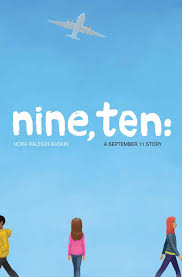
Nine, ten: a September 11 Story

From Publisher's Weekly...

For a generation of readers born and raised after 9/11, Baskin (Ruby on the Outside) offers a powerful account of how the events changed lives. Her cast is made up of four middle-school students who briefly cross paths at Chicago's bustling O'Hare Airport two days before the Twin Towers fall. Characters include Will, a Pennsylvania boy still grieving his father's death; Aimee, settling into her new home in Los Angeles while her mother is on a business trip in New York City; Brooklyn native Sergio, who has just won a national math award; and Nadira, a Muslim girl from Ohio who is trying to fit in by not wearing her "beliefs on her sleeve." Hours before the hijackings, the children are preoccupied with family and peers, but after learning about the terrorist attacks, all are deeply and personally touched in some way, their problems put in new perspective. There are no graphic displays of violence; Baskin focuses on how her characters emerge wiser, worldlier, and more sensitive to others' pain after surviving a profound and tragic piece of history. Ages 8–12.

OK...

The Mystery of Hollow Places


From Publisher's Weekly...

When Immy Scott's father, a mystery writer, tells his daughter the story of his marriage and, later, her mother's abandonment, he says, "The women in that family were cursed. They could be lonely wherever they were. But not us, Immy. We have each other." Despite a therapist stepmother always asking questions and a father prone to bipolar episodes, high school senior Immy and her dad are inseparable—until he disappears on Valentine's Day. Using methods from her father's detective books and tips from a host of mystery greats, Immy attempts to track down her mother in hopes of finding her father. With the help of best friend Jessa, Immy crawls through hospital records, interviews long-forgotten neighbors, and discovers that the stories told about her parents are just as fictional as her father's bestsellers. Debut author Podos makes capable use of believable characters and addictive clues to keep readers guessing. Through Immy's preoccupation with du Maurier's Rebecca, Podos provides the stirring thematic core of the novel—that obsession with the past can be its own form of dangerous curse. Ages 14–up. Agent: Lana Popovic, Chalberg & Sussman. (Jan.)

OK....

The Fever Code

From Kirkus...

Kirkus Reviews
Dashner returns to his dystopian future in this second prequel to the blockbuster Maze Runner series, detailing how the maze came into being.Solar flares inflicted horrible damage to the Earth, and the resulting illness known as the Flare has mown down much of the human population. A few survivors, primarily children, are known to be immune to the disease that is driving their loved ones into madness and death. Taken to a hidden scientific research complex in Alaska known as World In Catastrophe, Killzone Experiment Department, they grow up in near isolation, with little human contact. Thomas is a "munie," taken when he was only 5, destined to be an elite subject in a long-range study to find a cure. It's only after several years he meets other munies, developing friendships with many. But it's Teresa who becomes more than a friend, his partner in developing the maze, meant to help scientists understand how different stimuli impact munies' brains. Along the way, Thomas sees incredible cruelty inflicted on his friends, all in the cause of developing an elusive cure. He's been taught that "WICKED is good"…but how long can he actually believe it? While the story details how the maze was built, it is still confusing as to why, giving this the feeling of simply a preface to set up all that follows. Thomas (evidently white, though his comrades are a multiethnic crew) goes from scene to scene like a piece on a Parcheesi board, moving in fits and starts to a predetermined end. Will satisfy die-hard fans of the original trilogy.

Good, but not nearly as good as Maze Runner!

Friday, May 26, 2017

Unwind

From Publisher's Weekly

Shusterman (Everlost ) explores one of the most divisive of topics—abortion—in this gripping, brilliantly imagined futuristic thriller. After a civil war waged over abortion has almost destroyed America, completely new laws are in effect. Human life can never be “terminated,” but between the ages of 13 and 18, a child can be “unwound” by his parents, an irrevocable decision that leads to every single bit of his body being harvested for medical use. As the novel opens, 16-year-old Connor has secretly discovered his parents’ copy of his unwind order, and decides to “kick-AWOL,” or run away. Connor’s escape inadvertently sweeps up two other Unwinds: a ward of the state who is not quite talented enough to merit her place in a state home any longer, and the 10th son of religious parents, who gave birth to him just to “tithe” him. Beyond his pulse-pounding pace, the cliffhangers and the bombshells, Shusterman has a gift for extrapolating the effects of alien circumstances on ordinary people and everyday behavior. He brings in folklore, medical practices, and slang that reflect the impact of unwinding, creating a dense and believable backdrop. Characters undergo profound changes in a plot that never stops surprising readers. The issues raised could not be more provocative—the sanctity of life, the meaning of being human—while the delivery could hardly be more engrossing or better aimed to teens. Ages 13-up. (Nov.)

I really enjoyed this!

Wednesday, April 19, 2017

As Brave As You

From Publisher's Weekly.....
Schneider Family Book Award Winner
Coretta Scott King Author Honor Book

Reynolds (All American Boys) aims for a younger audience with the story of Genie and Ernie, two Brooklyn boys spending a month with their grandparents in North Hill, Va., while their parents try to mend a frayed marriage. Eleven-year-old Genie is most concerned about the lack of Internet access: how will he look up answers to the questions that constantly come to him? Ernie, nearly 14, is happy enough when he meets Tess, a neighbor who gives them the lowdown on North Hill, but neither brother has any idea that their stay will involve picking peas in the hot sun and, for Genie, keeping secrets—both his and those of his blind grandfather. Genie's efforts to fix his mistakes (including accidentally killing one of his grandfather's beloved birds), his realization that the Web doesn't have all the answers, and Grandpop's struggle with guilt and forgiveness after he pushes Ernie to participate in a dangerous family tradition create a multifaceted story that skillfully blends light and dark elements while showing children and adults interacting believably and imperfectly. Ages 10–up. 

Excellent story!